
2026 - 2027 Subaru Trailseeker Fuse Relay Boxes Location
2026 - 2027 Subaru Trailseeker, has 2 fuse and relay boxes, 1 fuse relay box in the engine compartment and 1 fuse relay box in the passenger compartment.
Engine Compartment Fuse Relay Box Location:
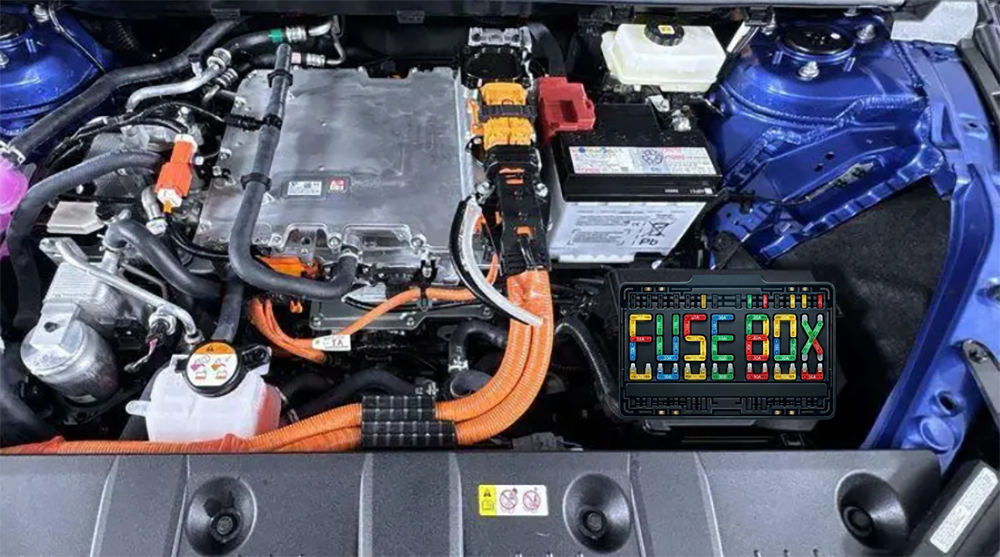
The location of the fuse box in the engine compartment is on the driver's side of the engine, near to the battery. The fuse and relays layout diagram is on the fuse relay box cover.
Passenger Compartment Fuse Relay Box Location:
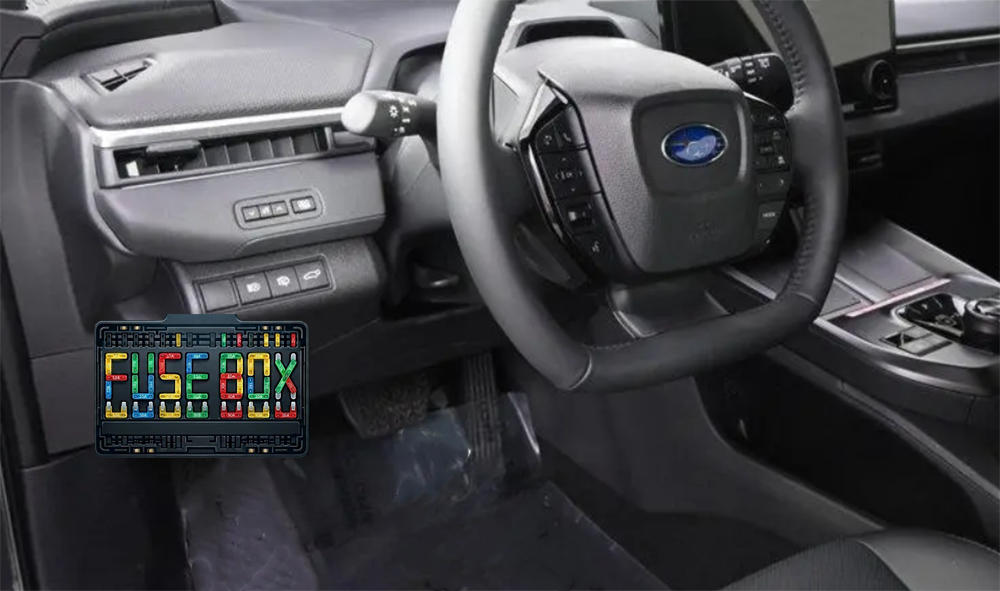
The location of the fuse box in the passenger compartment is on the driver's side under the dashboard, as with older Subaru models. The fuse layout diagram is on the fuse box cover.
WARNING AND NOTES REGARDING FUSE REPLACEMENT IN THE VEHICLE:
- The vehicle is secured against rolling away.
- All electrical consumers are switched off.
- The vehicle is switched off.
- Always replace faulty fuses with specified new fuses containing the correct amperage.
- Use only fuses appeoved for Subaru with the respective fuse rating.
- When is the fuse box open, make shure that no moisture can enter the fuse box.
- When closing the fuse box, make shure that the seal of the lid is positioned correctly on the fuse box.
Additional Notes:
Powertrain and Performance:
- Dual motors and all-wheel drive: Equipped with synchronous permanent magnet motors on the front and rear axles, forming a symmetrical all-wheel drive system (Symmetrical AWD), with a total output of 375 horsepower (approximately 280 kW).
- Acceleration: Acceleration from 0 to 100 km/h is approximately 4.4 to 4.5 seconds, making it the fastest production Subaru model to date.
- Regenerative braking: Supports a multi-level adjustable regenerative braking system, and the driver can adjust the level of regeneration using the paddles behind the steering wheel.
.Battery and Charging:
- Battery capacity: Equipped with a lithium battery with a capacity of 74.7 kWh.
- Range: Officially estimated range varies by market (EPA estimate for the US is approximately 281 miles, about 452 km; WLTP estimate for Australia is up to 533 km).
- Fast charging: Supports DC fast charging with a maximum power of 150 kW, enabling charging from 10% to 80% in approximately 28 to 30 minutes.
- Charging port: Standardly equipped with a NACS port (Tesla standard), allowing access to a large number of Tesla Supercharger stations.
- Battery preconditioning: Equipped with a battery preconditioning system that can be activated via navigation to a charging station or manually, to improve charging speed in low-temperature conditions.
External Power Supply:
- V2L function: For the Australian and other markets, the vehicle supports a vehicle-to-load (V2L) function with 1500 W of power, allowing external electrical devices to be powered from the vehicle's battery.